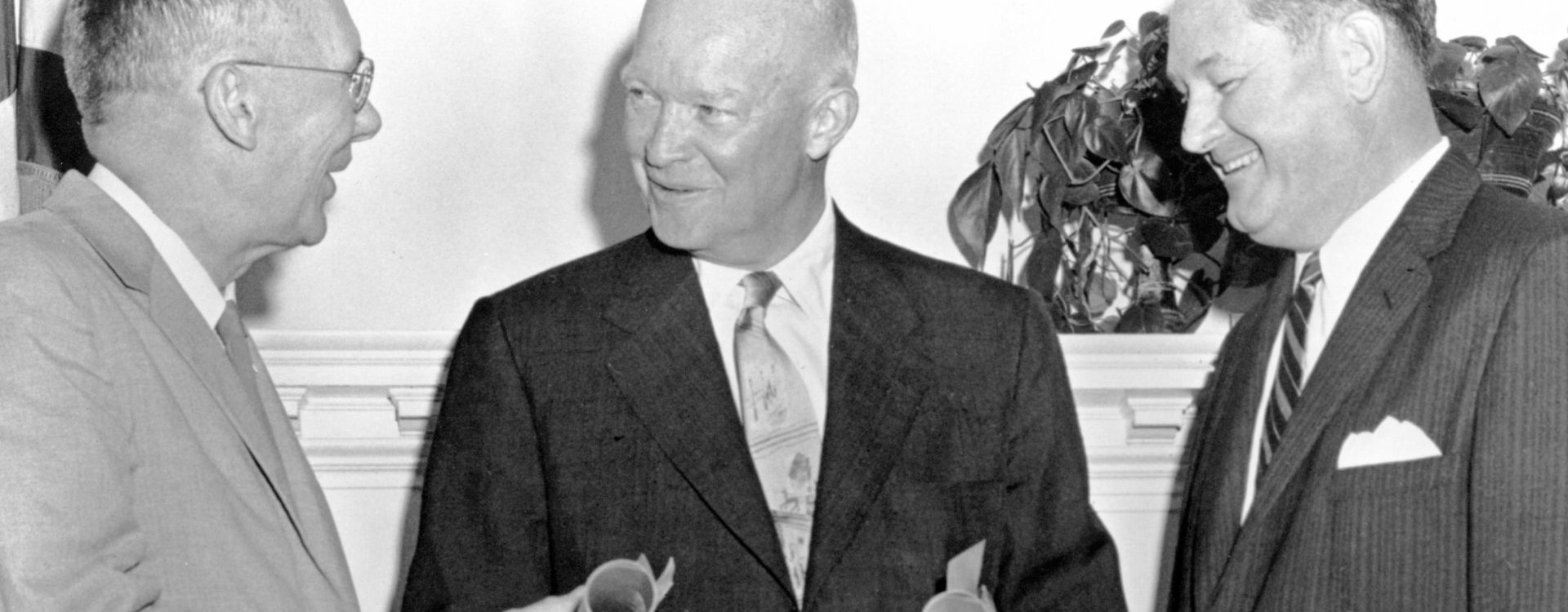
Dwight D. Eisenhower - The essence of a true leader and how the modern CEO could imitate him
Dwight D. Eisenhower was not merely a great military figure. He served as Supreme Commander of the Allied forces in western Europe during World War II and later became the 34th President of the United States.
What makes him truly exceptional, however, is not only the offices he held, but the way he led during moments of enormous pressure and historic responsibility.
Eisenhower may well represent the very essence of a true leader because he combined four rare qualities: preparation, calmness, coordination, and the absence of ego. In a world where many CEOs confuse leadership with visibility, Eisenhower reminds us that the real leader is not the loudest person in the room, but the one who keeps people united, the objective clear, and the direction steady.
The first and perhaps most important lesson is that leadership begins with preparation. Eisenhower was associated with some of the most demanding operations of the war, including the Normandy invasion, and he became famous for the line: “Plans are worthless, but planning is everything.” The meaning is profound. A leader cannot predict exactly what will happen, but he can build an organization that knows how to think, adapt, and respond when circumstances change.
For a modern CEO, this means something highly practical: do not rely on last-minute improvisation. Invest in processes, scenarios, contingency plans, and people who can perform effectively when uncertainty rises. Great companies do not endure because everything goes according to plan. They endure because they have learned how to plan seriously.
Eisenhower’s second great lesson is the ability to unite strong and very different personalities. Managing coalition warfare was extraordinarily complex, requiring coordination among multiple services, nations, and command structures in a hostile environment. This is not very different from the reality of a CEO who must keep executives, shareholders, departments, suppliers, and partners aligned.
The modern CEO who wishes to imitate Eisenhower must understand that leadership is not a personal performance. It is a work of integration. He or she must be able to manage strong characters without losing control, listen without becoming paralyzed, and make decisions without destroying team cohesion. Success does not come when everyone agrees on everything. It comes when everyone serves a common purpose.
The third trait of the true leader is composure. Eisenhower operated in conditions where the cost of a wrong decision was immense. Even so, his reputation was built on quiet strength and steadiness of judgment. This is a valuable lesson for modern management as well. A CEO who spreads panic, confusion, or nervousness ultimately weakens the entire organization. By contrast, a leader who maintains clarity when everyone else is under pressure becomes a point of stability for the whole team.
Finally, Eisenhower teaches us that great leadership is not obsessed with personal ego. His famous message to the soldiers, sailors, and airmen of the Allied Expeditionary Force before the Normandy invasion reflects a leader who placed the mission above personal display. That is precisely what many organizations still lack today: the shift from “appearing to be a leader” to “truly serving the mission, the team, and the result.”
Overall, Dwight D. Eisenhower shows that a true leader is not merely someone who gives orders. He is someone who prepares properly, unites different people, remains calm under pressure, and places the common objective above himself. If the modern CEO wishes to imitate him, there is no need to copy a military persona. What is needed is the adoption of a timeless principle: leadership means responsibility, discipline, and service to a purpose greater than personal prestige.
Would you like us to build leadership with substance, strategy, and real influence together?